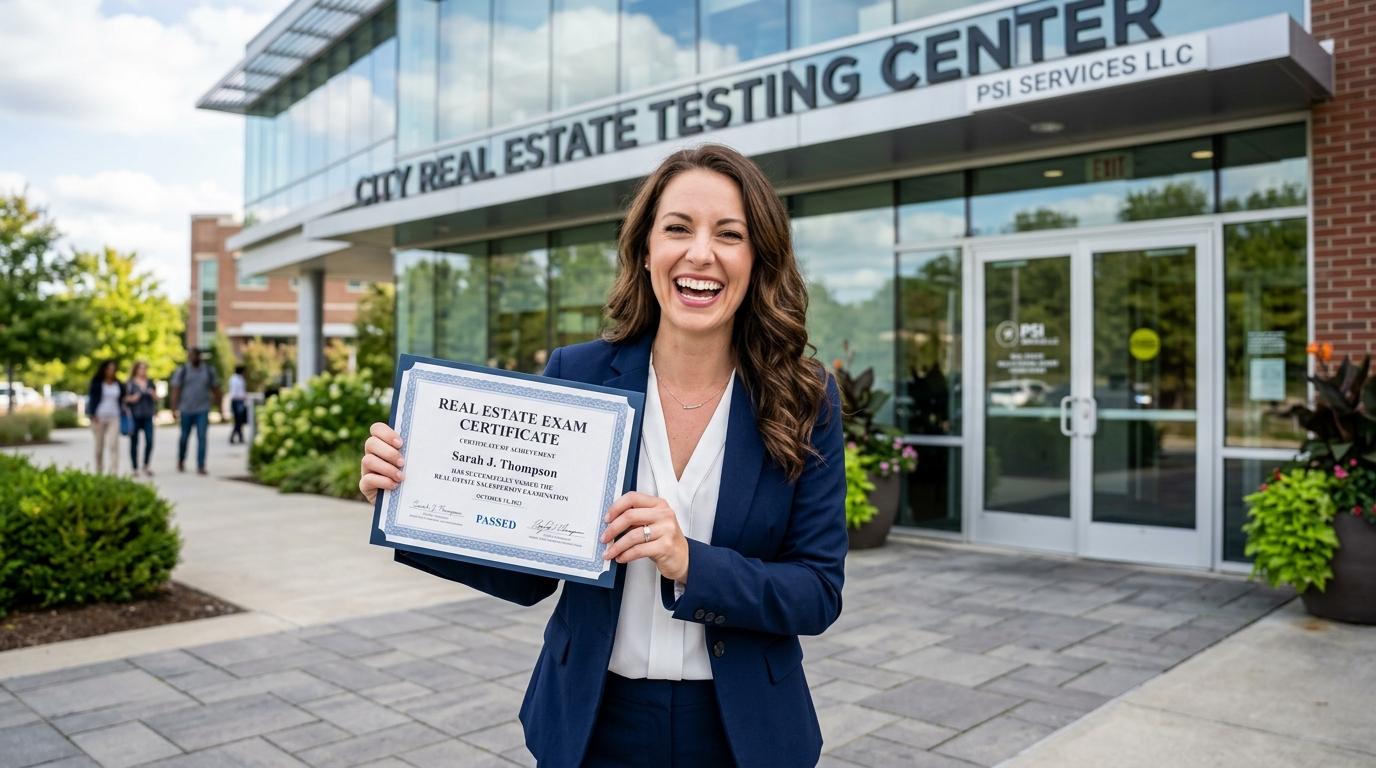
The Reality of Exam Fail Rates
Real estate licensing exams are designed to protect consumers by filtering out candidates who lack basic legal, mathematical, and ethical comprehension. With failure rates regularly exceeding 50% for first-time test takers in major states, you cannot pass on common sense alone. This guide details five key study methodologies to ensure you pass the test on your first try.
Tip 1: Master the Real Estate Vocabulary
The national and state exams are vocabulary-driven. If you do not know the definitions of key terms, you will struggle with situational questions. Use active recall to memorize these key concepts:
- Joint Tenancy vs. Tenancy in Common: Joint Tenancy features the *right of survivorship* (if one owner dies, their share automatically passes to the surviving owners, not their heirs) and requires the four unities: Time, Title, Interest, and Possession (PITT). Tenancy in Common allows unequal shares and allows shares to be willed to heirs.
- Riparian vs. Littoral Rights: Riparian rights govern flowing water like rivers or streams. Littoral rights govern non-flowing water like lakes or oceans.
- Deeds (General Warranty vs. Special Warranty vs. Quitclaim): A General Warranty Deed offers the highest level of buyer protection, covenants of seisin, and quiet enjoyment. A Special Warranty Deed covenants only against defects arising during the grantor's ownership. A Quitclaim Deed offers no warranties whatsoever, transferring only the interest the grantor holds.
Tip 2: Structured 4-Week Study Schedule
Spaced repetition is the key to memorizing legal codes. Avoid cramming the week of the exam. Instead, allocate 45–60 minutes per day over 4 weeks using this model:
- Week 1: Focus entirely on vocabulary flashcards and national real property concepts.
- Week 2: Master agency laws, fiduciary responsibilities, and contract law.
- Week 3: Dedicate 30 minutes daily to math practice questions (Cap rates, taxes, commissions, measurements).
- Week 4: Take full-length, timed mock exams to build testing stamina.
Tip 3: Demystify Real Estate Mathematics
Do not write off the math section. It represents 10% to 15% of the total questions. Focus on the core equations:
- Net Operating Income (NOI): Gross Rental Income − Vacancy Losses − Operating Expenses (Note: mortgage payments/debt services are NOT operating expenses).
- Tax Assessment: Assessed Value × Mill Rate (expressed as mills divided by 1,000).
- Measurement Conversion: Square feet divided by 43,560 to find total acreage.
Tip 4: Standardize Test-Day Pacing
The testing software at PSI and Pearson VUE centers allows you to flag questions and return to them later. Pacing is critical:
- First Pass: Answer only the questions you know instantly. If a question is long or requires calculation, flag it and move on.
- Second Pass: Return to the math and situational scenario questions. You will feel less pressure knowing you have already secured the simpler vocabulary marks.
- Elimination Strategy: Always eliminate the two obviously incorrect choices. If you must guess, choosing between the remaining two yields a 50% probability of success.
Tip 5: Error Log and Analysis
When taking mock exams, do not simply look at your final score. Review the explanation for every question you answered incorrectly. Write down the correct definition or formula in a notebook. This active writing process reinforces cognitive recall and patches the gaps in your knowledge.